Tag: Psychological Safety
-

Are Your Quiet Rock Stars Feeling Invisible?
TLDR; When team members feel forced to “toot their own horn” just to be noticed, psychological safety plummets and corporate theater takes over. If you are noticing an epidemic of “CC everyone,” public channel performances, or people fighting over high-profile projects, the environment is accidentally incentivizing unhealthy self-promotion. As leaders and managers, it is our…
-
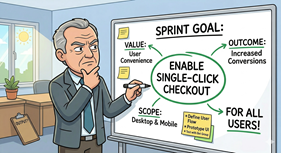
From Jira Jockey to Value Creation Mastermind
TLDR; The backlog shouldn’t be a list of chores. Move from being a “Jira Jockey” to a Value Mastermind by writing hypotheses instead of recipes. If the entire squad owns the outcome, not just the output, we stop completing tasks and start delivering actual results. Take the Coach’s Challenge this week and see how you…
-

You’re Getting Faster. Is Your Team Getting Lonelier?
TLDR; Shifting your team from “doers” to “directors” is the right move — but it comes with a hidden cost nobody is talking about: the social fabric of your team is quietly fraying. New research confirms that adding AI to a human team measurably reduces cohesion, trust, and shared identity. Your next leadership challenge isn’t just what your…
-

Is your “directive” style sapping your teams innovation and effectiveness?
tldr; Directiveness feels efficient, but it’s often a “Checklist Trap” that kills curiosity and stalls growth. If you find yourself doing all the talking or approving every minor decision, you aren’t just managing—you’re dismantling your team’s potential. Explore some red-flags and warning signs, and try something new to unleash the greatness within your team.
-
Celebrate “bad news,” it only makes us better!
tldr; The “agile mindset” means treating suboptimal results, negative feedback, and missed goals not as failures, but as invaluable data points and opportunities for improvement. Key takeaway: Leaders must foster a culture of Psychological Safety where teams are encouraged, not punished, to be transparent about disappointing results. Actionable steps: Use “bad news” to get curious, hypothesize, adjust strategy (pivot), and measure…
-
Never be afraid
📖 “Never be afraid to raise your voice for honesty and truth and compassion against injustice and lying and greed. If people all over the world would do this, it would change the earth.” – William Faulkner It takes courage to stand up and say something that may go against the grain, or be an unpopular…
-
True Leadership Is About Helping People To Grow
📖 A leader is best when people barely know he exists. When his work is done, his aim fulfilled, they will say: we did it ourselves.” -Lao Tzu True leadership is about helping people to grow, and enabling them to succeed. By creating a clear understanding of the goal, equipping people with the tools…
-
Share your thoughts!
📖 “A drop of ink may make a million think.”- George Gordon Byron Sharing your throughts and perspectives, asking your questions… these are the things that can help your team unlock an innovative solution. Why do we find it so hard sometimes, to share something that may be counter to what the group says?
-
Purpose To Alignment To Engagement
📖 “He who has a why to live for can bear almost any how.” – Friedrich NietzscheA shared senses of purpose leads to alignment. Alignment, coupled with psychological safety leads to engagement. Engaged teams out perform when compared to disengaged teams. Are your teams aware of the purpose they serve, and how they solve…